How Often Should You Deworm a Cat? A Simple Schedule for Kittens and Adults
Worms are one of the most common health problems in cats, including indoor cats. The good news: a regular deworming routine keeps most of them away. Here is how often to deworm a cat at every age, and how to make sure you never lose track.
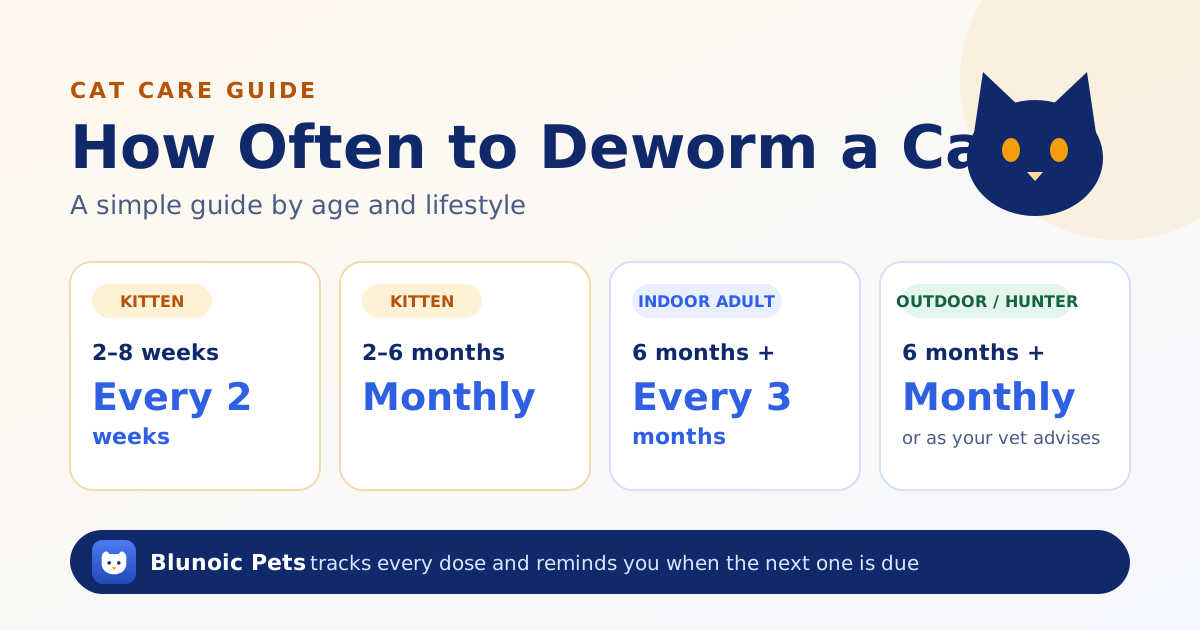
A common deworming routine. Your veterinarian may change it based on your cat’s health, diet, hunting and local parasites.
Why cats need deworming
Intestinal worms are common in cats of all ages. Kittens often get roundworms from their mother’s milk, and adult cats pick up worms by hunting, swallowing fleas while grooming, or from contaminated soil and food. Worms take nutrients from your cat, can cause tummy problems and weight loss, and some can spread to people.
A regular cat deworming schedule treats worms before they cause problems, often before you would ever notice them.
How often to deworm a cat at every age
This is a common routine based on guidance such as the Companion Animal Parasite Council (CAPC) recommendations. Your vet may adjust it.
| Cat | How often | Notes |
|---|---|---|
| Kittens, 2–8 weeks | Every 2 weeks | Start at about 2–3 weeks old. Nursing mothers are often treated at the same time. |
| Kittens, 2–6 months | Once a month | Keep going monthly until 6 months old. |
| Indoor adults | About every 3 months | Or a stool test once or twice a year, as your vet advises. |
| Outdoor cats, hunters, raw-fed | Monthly | Higher exposure from prey, soil and fleas. |
| New or adopted cats | On arrival | Deworm and test a stool sample, then follow the routine above. |
Common worms in cats
- Roundworms: the most common worm, especially in kittens. They can look like spaghetti in poop or vomit.
- Tapeworms: usually come from swallowing fleas or eating mice. Look for small rice-like segments near the tail. Flea control is part of the fix.
- Hookworms: less common, but they feed on blood and can cause anemia in kittens.
- Lungworms and heartworms: not intestinal worms, but some broad parasite products help prevent them. Ask your vet about your area.
Signs your cat may have worms
- Worms or rice-like segments in poop, vomit or around the tail
- A pot-bellied look, especially in kittens
- Diarrhea, vomiting or weight loss despite a good appetite
- Dull coat, low energy, or scooting
Many cats with worms look completely normal. That is exactly why deworming on a schedule works better than waiting for symptoms.
Do indoor cats really need deworming?
Yes, usually less often. Indoor cats can still swallow fleas that come in on clothes or other pets, catch the occasional insect or mouse, or be exposed through potting soil. Many vets suggest deworming indoor cats about every three months, or testing a stool sample once or twice a year and treating if needed.
Tips for a stress-free routine
- Use a cat-specific dewormer at the right dose for your cat’s current weight. Never give dog products to cats.
- Pair deworming with flea prevention to stop tapeworms coming back.
- Scoop the litter box daily and wash your hands after cleaning it.
- Write down the date and product every time. If your cat gets sick, your vet will want to know.
Keep track with Blunoic Pets
Deworming only works if it happens on time, and “every three months” is easy to forget. Blunoic Pets is a pet health app that remembers for you.
Blunoic Pets is launching soon on Android and iPhone. Join the waitlist below and we’ll let you know when it’s ready.
Frequently asked questions
How often should I deworm my kitten?
Kittens are usually dewormed every 2 weeks from about 2–3 weeks of age until 8 weeks, then once a month until they are 6 months old. Your vet will choose a product that is safe for your kitten’s age and weight.
How often should an indoor adult cat be dewormed?
Many veterinarians recommend deworming indoor adult cats about every 3 months, or checking a stool sample once or twice a year. Some year-round parasite products also cover common worms.
How often should an outdoor cat be dewormed?
Cats that go outside, hunt or eat raw food are exposed to worms more often, so monthly deworming or monthly parasite prevention is common. Ask your vet what fits your cat.
Can I see worms in my cat’s poop?
Sometimes. Roundworms can look like spaghetti, and tapeworm segments look like small grains of rice near the tail or in the litter box. Many cats with worms show no visible signs at all, which is why a regular schedule matters.
Can people catch worms from cats?
Some cat worms, such as roundworms and hookworms, can infect people, especially children. Regular deworming, scooping the litter box daily and washing hands help protect your family.
Important: This guide is general information, not veterinary advice. The right deworming product and schedule depend on your cat’s age, weight, health, diet, lifestyle and local parasites. Never use dog dewormers on cats, and always follow your veterinarian’s advice.