Puppy Vaccine Schedule: A Week-by-Week Guide for New Puppy Parents
Bringing home a puppy is exciting, and a little overwhelming. One of the most important things to get right in the first months is the vaccine schedule: which shots, when, and what comes after. Here is a simple, week-by-week guide.
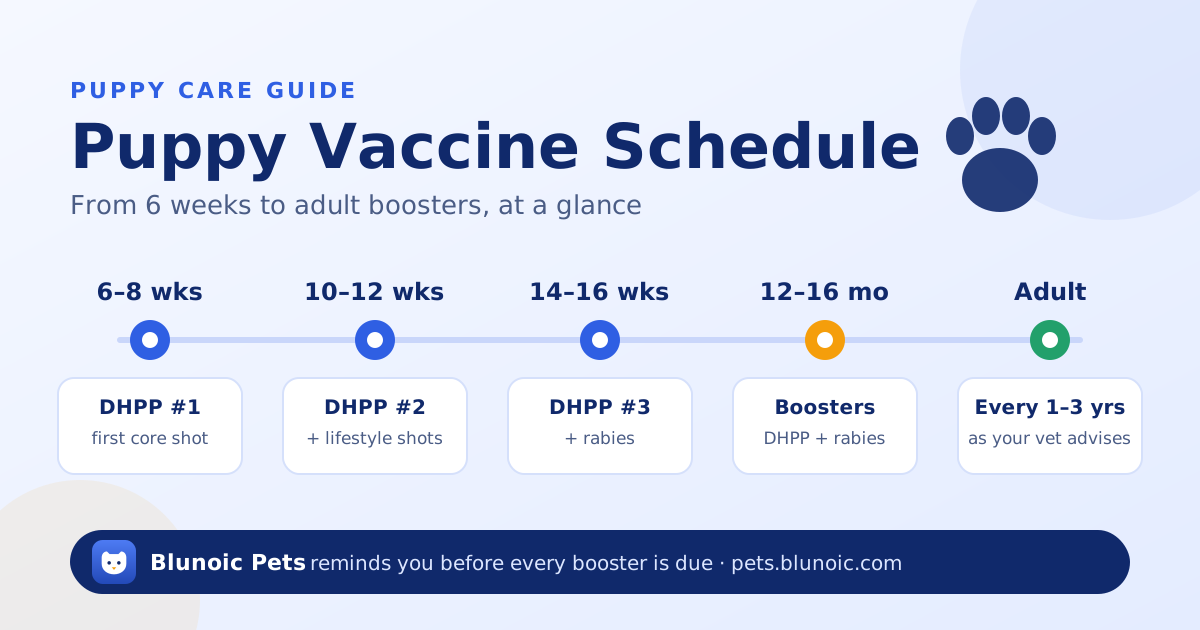
A typical core puppy vaccine timeline. Your veterinarian may adjust it for your puppy, your area and local law.
Why puppies need a series of shots
Newborn puppies get some protection from their mother’s milk. Those maternal antibodies fade over the first few months, but while they are still around they can block a vaccine from working. Because nobody knows exactly when a particular puppy’s maternal protection runs out, veterinarians give a series of vaccines every 2–4 weeks until about 16 weeks of age. That way, one of the doses lands right when the puppy’s own immune system can respond.
That is why a single puppy shot is never enough, and why sticking to the schedule matters so much.
The puppy vaccine schedule at a glance
Here is a typical puppy shots schedule based on widely used veterinary guidelines (such as those from the American Animal Hospital Association and the WSAVA). Your vet will tailor it to your puppy.
| Puppy’s age | Core vaccines | Lifestyle vaccines (if your vet recommends) |
|---|---|---|
| 6–8 weeks | DHPP, first dose | Bordetella (kennel cough) may start |
| 10–12 weeks | DHPP, second dose | Leptospirosis (dose 1), canine influenza, Lyme (in tick areas) |
| 14–16 weeks | DHPP, third dose · Rabies (12–16 weeks, per local law) | Leptospirosis (dose 2), second dose of others started earlier |
| 16–20 weeks | Final DHPP if your vet advises (series should end at 16 weeks or older) | — |
| 12–16 months | DHPP booster · Rabies booster | Yearly lifestyle boosters |
| Adult dogs | DHPP every 3 years · Rabies every 1–3 years (product and law) | Usually once a year, based on risk |
Core vaccines every puppy needs
Core vaccines protect against diseases that are widespread, serious and sometimes fatal. Every puppy should get them, wherever they live.
- DHPP (sometimes DAPP or DA2PP): one combination shot that covers distemper, hepatitis (adenovirus type 2), parvovirus and parainfluenza. Parvovirus in particular is very contagious and dangerous for young puppies.
- Rabies: a fatal disease that can spread to people. In many places the rabies vaccine is required by law. Puppies usually get it between 12 and 16 weeks of age.
Lifestyle (non-core) vaccines
These depend on where you live and how your puppy spends its time. Your vet will ask about boarding, daycare, travel, hiking and local disease risks.
- Leptospirosis: spread through water and wildlife urine; two doses 2–4 weeks apart, then yearly.
- Bordetella (kennel cough): often required for daycare, boarding and grooming.
- Canine influenza: recommended for social dogs in areas with outbreaks.
- Lyme disease: for dogs in tick-heavy areas, along with good tick prevention.
After the puppy series: adult boosters
The puppy series is only the beginning. Around one year after the last puppy shot, dogs get boosters for DHPP and rabies. After that, core vaccines are commonly given every three years, and lifestyle vaccines usually once a year. This is where many dog owners slip: the dates are far apart, so they are easy to forget.
Tips for vaccine days
- Bring your puppy’s vaccine record, especially if the breeder or shelter gave earlier shots.
- Mild tiredness or a sore spot for a day is common. Call your vet if you notice face swelling, vomiting, hives or trouble breathing.
- Ask your vet about deworming and flea and tick prevention at the same visit; they are part of the same preventive care routine.
- Until the series is complete, keep socializing your puppy in safe places with healthy, vaccinated dogs.
Never miss a booster with Blunoic Pets
Remembering a dozen vaccine dates spread over years is hard, and paper certificates get lost. Blunoic Pets is a pet health app built to take that job off your hands.
Blunoic Pets is launching soon on Android and iPhone. Join the waitlist below and we’ll let you know when it’s ready.
Frequently asked questions
How many shots does a puppy need?
Most puppies get a core combination vaccine (DHPP) every 2–4 weeks from about 6–8 weeks of age until they are at least 16 weeks old, usually three or four doses, plus a rabies vaccine around 12–16 weeks. Your veterinarian may add lifestyle vaccines such as leptospirosis or Bordetella.
When can my puppy go outside or meet other dogs?
Until the puppy series is complete, avoid places where many unknown dogs go, such as dog parks and pet stores. Short walks in clean areas and meeting healthy, fully vaccinated dogs you know are usually fine. Ask your vet when your puppy is protected.
What if my puppy misses a vaccine appointment?
Call your veterinarian and reschedule as soon as you can. A delay of a few days is usually manageable, but longer gaps may mean an extra dose is needed to make sure your puppy is protected.
Do adult dogs need vaccines every year?
Not always. After the first booster at around one year, many core vaccines are given every three years, while some lifestyle vaccines (such as leptospirosis or Bordetella) are often yearly. Rabies timing follows the vaccine used and local law.
How can I keep track of my puppy’s vaccines?
Keep a record of each vaccine, the date it was given and when the next dose is due. An app like Blunoic Pets stores the vaccine history and creates a reminder before every booster, so you don’t have to remember the dates yourself.
Important: This guide is general information, not veterinary advice. Vaccine schedules depend on your puppy’s age, health, history, where you live and local laws (especially for rabies). Always follow your veterinarian’s recommendations.