Adult Dog and Cat Vaccine Booster Schedule: Which Shots, and How Often
The puppy and kitten shots are only the start. Adult dogs and cats need boosters to stay protected, but not every vaccine every year. Here is a clear adult vaccine booster schedule for dogs and cats, what each shot protects against, and how to keep track for every pet.
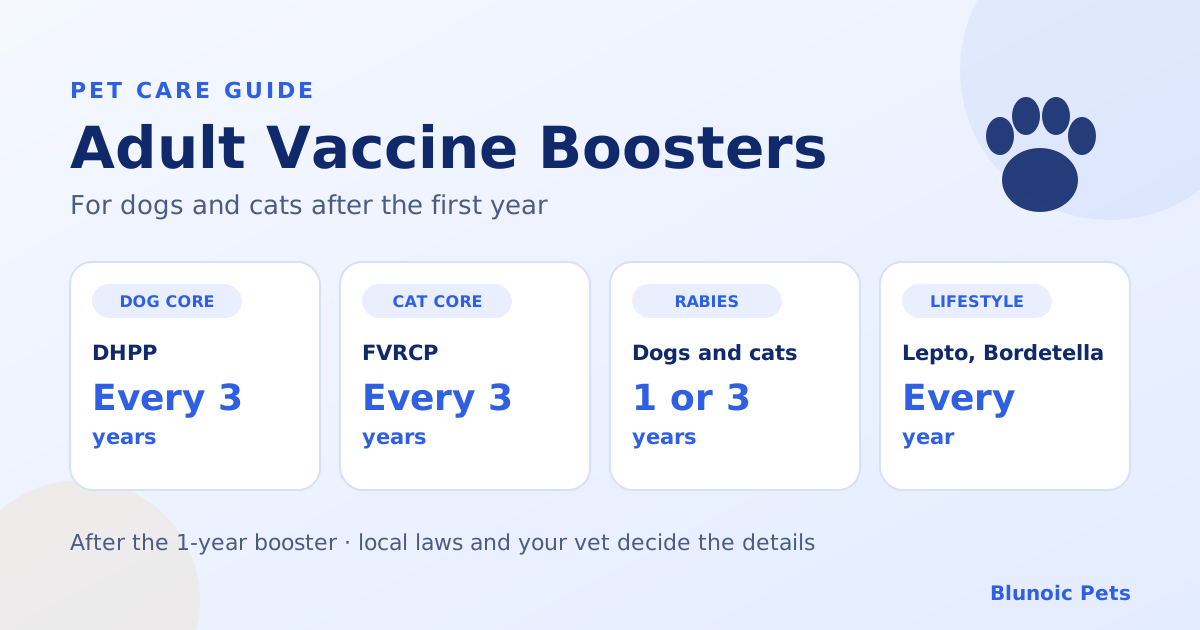
A common adult booster routine based on AAHA and AAFP guidance. Your veterinarian may adjust it for your pet’s lifestyle, health and local laws.
Why adult pets need boosters
Vaccines train the immune system, but protection fades over time. Boosters keep it strong against serious diseases such as parvovirus, distemper, panleukopenia and rabies. Modern guidance from groups like the American Animal Hospital Association (AAHA) spaces some boosters to every 3 years, while others are still yearly.
The schedule usually starts with a booster about 1 year after the puppy or kitten series. After that, the routine below applies.
Adult dog vaccine schedule
| Vaccine | How often (adult dogs) | Who needs it |
|---|---|---|
| DHPP / DAPP (distemper, hepatitis, parvovirus, parainfluenza) | Every 3 years | All dogs (core) |
| Rabies | Every 1 or 3 years | All dogs (core). Depends on the vaccine and local law. |
| Leptospirosis | Every year | Dogs near water, wildlife, farms or in cities with rats. Recommended for many dogs. |
| Bordetella (kennel cough) | Every 6–12 months | Dogs that go to daycare, boarding, grooming or dog parks |
| Lyme disease | Every year | Dogs in tick areas |
| Canine influenza | Every year | Social dogs in areas with outbreaks |
Adult cat vaccine schedule
| Vaccine | How often (adult cats) | Who needs it |
|---|---|---|
| FVRCP (feline herpesvirus, calicivirus, panleukopenia) | Every 3 years | All cats (core), including indoor cats |
| Rabies | Every 1 or 3 years | Core in many areas. Depends on the vaccine and local law. |
| FeLV (feline leukemia) | Every 1–2 years if at risk | Cats that go outdoors or live with FeLV-positive cats |
Indoor cats still need their core vaccines. Panleukopenia virus survives for months and can come in on shoes, and cats escape or need boarding.
Do senior pets still need vaccines?
Usually, yes. Older pets can have weaker immune systems, so staying protected matters. Your vet may adjust which vaccines a senior pet gets based on health and lifestyle, often at the twice-yearly senior check-up.
Titer tests instead of boosters
A titer test measures antibodies in the blood. Some owners use it to decide whether a DHPP or FVRCP booster is needed yet. Titers can’t replace rabies vaccination where it is required by law. Ask your vet if titer testing makes sense for your pet.
Tips for vaccine visits
- Bring your pet’s vaccine history, especially if you changed vets or adopted an adult pet.
- Ask which vaccines are core and which are recommended for your pet’s lifestyle.
- Mild tiredness or soreness for a day is common. Facial swelling, hives, vomiting or trouble breathing need a vet right away.
- Keep proof of rabies vaccination for travel, boarding and grooming.
Keep track with Blunoic Pets
Some vaccines are yearly, some every 3 years, and every pet is different. Blunoic Pets keeps it all straight.
Blunoic Pets is free on Google Play for Android. The iPhone app is coming soon.
Frequently asked questions
How often do adult dogs need vaccines?
After the 1-year booster, most adult dogs get DHPP every 3 years, rabies every 1 or 3 years depending on the vaccine and law, and lifestyle vaccines such as leptospirosis, Bordetella and Lyme every year.
How often do adult cats need vaccines?
After the 1-year booster, most adult cats get FVRCP every 3 years and rabies every 1 or 3 years. Cats at risk of feline leukemia get FeLV every 1 to 2 years.
Do indoor cats need vaccines?
Yes. Indoor cats need core vaccines such as FVRCP. Viruses can come in on shoes and clothing, and indoor cats sometimes escape or need boarding.
Is the rabies vaccine every year or every 3 years?
It depends on the vaccine used and local law. Some rabies vaccines are given yearly and others every 3 years after the first booster.
Does my dog need the leptospirosis vaccine every year?
Yes, leptospirosis protection lasts about a year, so dogs at risk are vaccinated yearly. Many vets now recommend it for most dogs.
Do senior dogs and cats still need vaccines?
Usually yes, though your vet may tailor them to your pet’s health and lifestyle. Senior pets often see the vet twice a year, which is a good time to review vaccines.
What is a titer test?
A blood test that measures antibodies to some diseases. It can help decide whether a DHPP or FVRCP booster is needed yet, but it can’t replace rabies vaccination where it is required.
How do I keep track of my pet’s vaccine boosters?
Use a pet vaccine reminder app. Blunoic Pets records every vaccine and reminds you before each booster is due, for every pet in your home.
Can one app track boosters for all my dogs and cats?
Yes. In Blunoic Pets each dog and cat has their own vaccine history and booster dates, all in one account, and you get a reminder before each booster is due.
About Blunoic Pets: Blunoic Pets is a free pet care tracker app and pet care schedule app for dogs and cats. It plans preventive care, works as a pet vaccine tracker and pet medication reminder app, and keeps digital pet records and health records for every pet in one account, so it is also a multi-pet tracker. Your family and pet sitters can share care in the same app, and the daily routine works as a puppy potty tracker and a dog feeding and walk tracker, with weight trends for every pet. Free on Google Play and the web; the iPhone app is coming soon.
Important: This guide is general information, not veterinary advice. Vaccine schedules depend on your pet’s age, health, lifestyle, the vaccine used and local laws. Always follow your veterinarian’s advice.