Kitten Vaccine Schedule: A Week-by-Week Guide for New Kitten Parents
Your kitten’s first few months are when vaccines matter most. Here is a simple, week-by-week kitten vaccine schedule: which shots your kitten needs, when, and how to make sure none of them slips through the cracks.
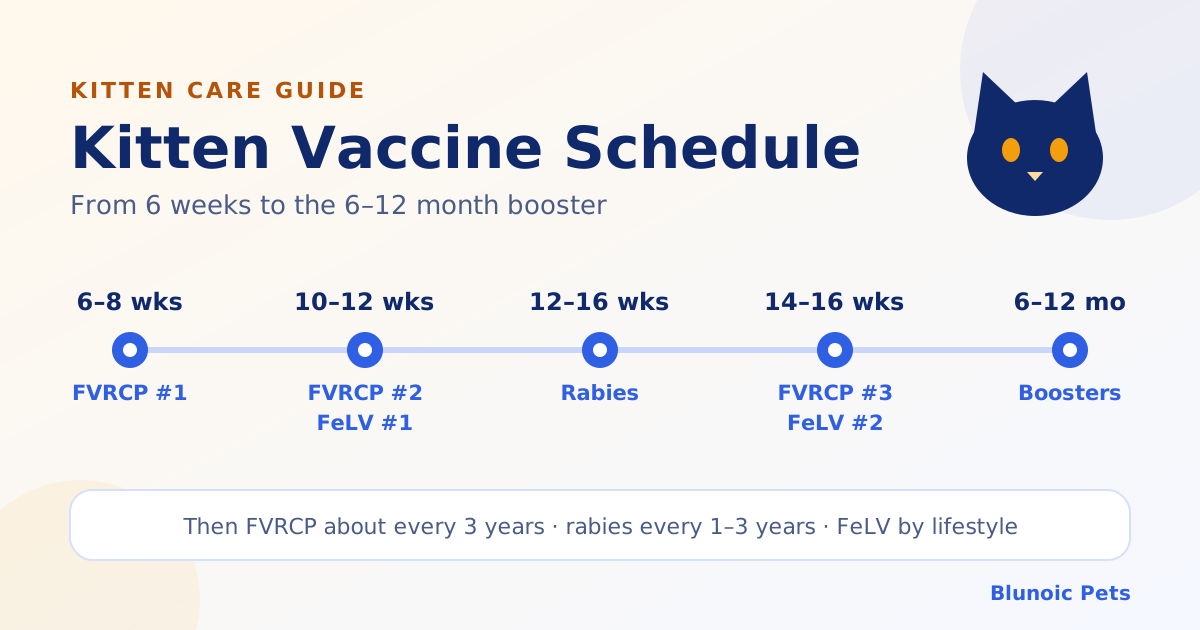
A common kitten vaccine schedule. Your veterinarian may change it based on your kitten’s health, lifestyle and local laws.
Why kittens need vaccines
Kittens get some protection from their mother’s milk, but it fades over the first few months, and it can also stop early vaccines from working. That is why kittens get a series of shots a few weeks apart instead of a single one: each dose gives the immune system another chance to respond as the mother’s protection wears off.
The diseases kitten vaccines prevent, like feline panleukopenia, are serious and spread easily, sometimes on shoes, hands or bedding. Vaccinating on time is one of the simplest ways to protect your kitten for life.
Core and non-core vaccines
Veterinarians group cat vaccines into two kinds, following guidance such as the AAHA and American Association of Feline Practitioners feline vaccination guidelines:
- Core vaccines are recommended for every kitten: FVRCP (feline viral rhinotracheitis, calicivirus and panleukopenia) and rabies. FeLV (feline leukemia virus) is also recommended for all kittens, because their lifestyle as adults isn’t known yet.
- Non-core vaccines depend on lifestyle and where you live, such as Chlamydia felis or Bordetella for cats in shelters, catteries or multi-cat homes.
Kitten vaccine schedule, week by week
This is a common schedule. Your vet will adjust it to your kitten’s age at adoption, health and local rabies laws.
| Age | Vaccines | Notes |
|---|---|---|
| 6–8 weeks | FVRCP #1 | Start of the kitten series. Often paired with deworming and a first health check. |
| 10–12 weeks | FVRCP #2, FeLV #1 | FeLV can start from 8 weeks; ask your vet about an FeLV test first. |
| 12–16 weeks | Rabies | Timing and product follow local law. Usually a single dose at this age. |
| 14–16 weeks | FVRCP #3, FeLV #2 | FeLV #2 comes 3–4 weeks after the first dose. |
| 16–20 weeks | Final FVRCP (if needed) | The last kitten FVRCP dose should be given at 16 weeks or older. |
| 6–12 months | FVRCP booster, FeLV booster | Completes the kitten series. Rabies booster timing depends on the product used. |
Adopted an older kitten (over 16 weeks)? It usually needs two FVRCP doses 3–4 weeks apart, plus rabies and FeLV, rather than starting from scratch at the beginning of this table.
What each vaccine protects against
- Feline panleukopenia (the “P” in FVRCP): a severe, often fatal virus that attacks the gut and immune system. It survives a long time in the environment.
- Feline herpesvirus and calicivirus (the “VR” and “C”): the main causes of cat flu, with sneezing, eye infections, mouth ulcers and fever.
- Rabies: always fatal and can spread to people. Rabies vaccination is required by law for cats in many places.
- Feline leukemia virus (FeLV): spreads through close contact like grooming and shared bowls, and weakens the immune system over time.
Side effects and what’s normal
Most kittens are fine after their shots. It is normal to see, for a day or so:
- Sleepiness or a slightly lower appetite
- A mild fever or a little soreness where the shot was given
- A small, painless lump at the injection site that fades within a few weeks
Call your vet right away if your kitten has trouble breathing, facial swelling, repeated vomiting, collapses, or if a lump is still there after about a month or keeps growing.
Do indoor kittens need vaccines?
Yes. Panleukopenia can be carried indoors on shoes and clothes, bats and other animals can bring rabies inside, and many “indoor” cats slip outside at some point or board at a cattery. Your kitten should get the full core series even if it will live indoors. Your vet may then space out boosters for a strictly indoor adult cat.
Boosters after the kitten series
| Vaccine | Adult cats |
|---|---|
| FVRCP | Often every 3 years after the 6–12 month booster |
| Rabies | Every 1 or 3 years, depending on the product and local law |
| FeLV | Yearly or every 2–3 years for cats that go outside or live with other cats; often stopped for indoor-only cats |
Keep track with Blunoic Pets
Three or four vet visits in a few months, then boosters spread across years: it is a lot to remember. Blunoic Pets keeps your kitten’s vaccines on track for you.
Blunoic Pets is free on Google Play for Android. The iPhone app is coming soon.
Frequently asked questions
When should a kitten get its first vaccines?
Most kittens get their first FVRCP vaccine at 6–8 weeks old. The series is repeated every 3–4 weeks until the kitten is at least 16 weeks old, then boosted at 6–12 months.
How many shots does a kitten need?
Usually three or four FVRCP doses, one rabies vaccine and two FeLV doses during the kitten series, followed by boosters at 6–12 months. Your vet will tailor the number to your kitten’s age and history.
What is the FVRCP vaccine?
FVRCP is a combination vaccine that protects against feline viral rhinotracheitis (herpesvirus), calicivirus and panleukopenia. It is a core vaccine recommended for every cat.
Does an indoor kitten need vaccines?
Yes. Panleukopenia can be carried indoors on shoes and clothes, rabies is required by law in many places, and indoor cats sometimes get out or need boarding. Indoor kittens should get the full core series.
Is the FeLV vaccine necessary for kittens?
Feline leukemia vaccination is recommended for all kittens, because a kitten’s future lifestyle isn’t known yet. For adult cats that stay strictly indoors and live alone, your vet may stop FeLV boosters.
What are common side effects of kitten vaccines?
Mild tiredness, a slightly lower appetite, a low fever or a small lump at the injection site for a day or two are common. Call your vet urgently for trouble breathing, facial swelling, repeated vomiting or collapse.
Can my kitten go outside before finishing its vaccines?
It is safest to keep your kitten indoors and away from unvaccinated cats until about two weeks after the final kitten vaccines. Ask your vet when your kitten is fully protected.
What if my kitten misses a vaccine booster?
Call your vet and get back on schedule as soon as you can. If the gap is long, your vet may restart part of the series. A missed dose leaves your kitten less protected until it is given.
How often do adult cats need vaccines?
After the 6–12 month boosters, FVRCP is often given every 3 years, rabies every 1 or 3 years depending on the product and local law, and FeLV based on lifestyle. Your vet will set the schedule.
How can I remember my kitten’s vaccine dates?
Use a pet health app. Blunoic Pets builds a care plan for your kitten, reminds you before each vaccine is due, and keeps every vaccine record in one place, shared with your family.
Is there a pet vaccine tracker app for kittens?
Yes. Add your kitten’s birthday and the vaccines already given to Blunoic Pets, and it shows when the next ones are due and reminds you before each.
About Blunoic Pets: Blunoic Pets is a free pet care tracker app and pet care schedule app for dogs and cats. It plans preventive care, works as a pet vaccine tracker and pet medication reminder app, and keeps digital pet records and health records for every pet in one account, so it is also a multi-pet tracker. Your family and pet sitters can share care in the same app, and the daily routine works as a puppy potty tracker and a dog feeding and walk tracker, with weight trends for every pet. Free on Google Play and the web; the iPhone app is coming soon.
Important: This guide is general information, not veterinary advice. The right vaccines and timing depend on your kitten’s age, health, lifestyle and local laws. Always follow your veterinarian’s advice.