New Puppy and Kitten Checklist: Supplies, First Vet Visit and the First 30 Days
Bringing home a puppy or kitten is exciting, and a little overwhelming. A short plan makes the first weeks calmer for everyone. Here is a complete new puppy and kitten checklist: what to buy, what to book, and what to do in the first 30 days.
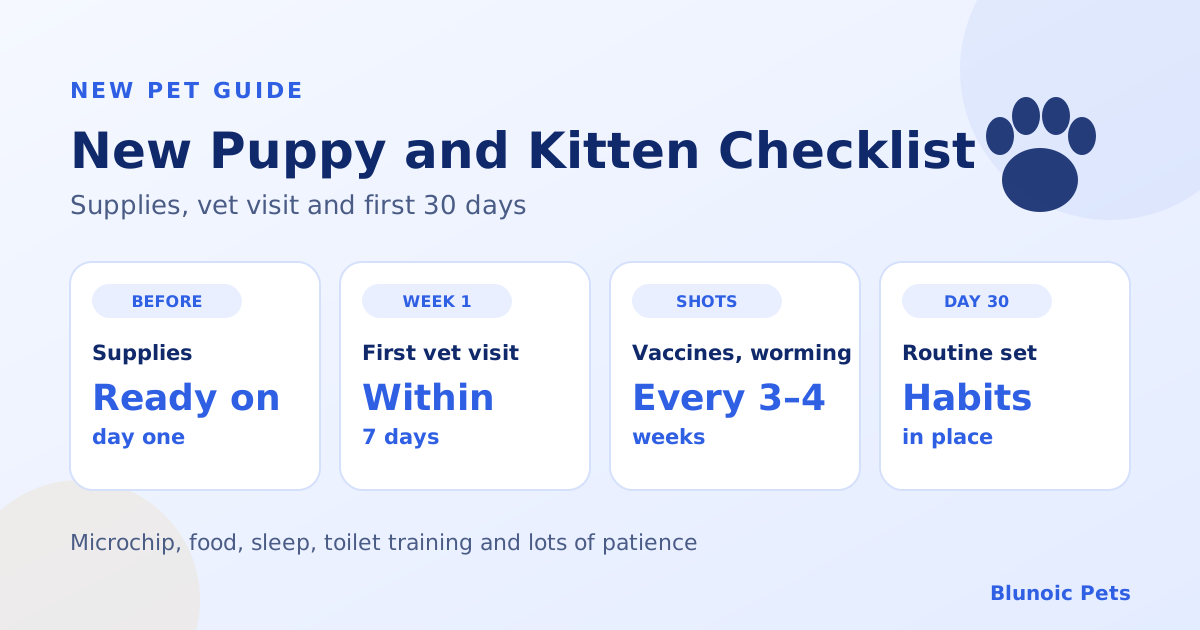
The essentials for a new puppy or kitten. Your veterinarian will tailor vaccines and parasite control to your pet.
Supplies to buy before day one
For a new puppy:
- Food the breeder or shelter used (switch slowly over 7–10 days), plus food and water bowls
- Crate or puppy pen, and a soft bed
- Collar or harness, ID tag and a lead
- Puppy pads, poop bags and an enzyme cleaner for accidents
- Chew toys and puzzle toys, soft brush and puppy shampoo
- Small training treats
For a new kitten:
- Kitten food, plus shallow food and water bowls
- Litter box (one per cat, plus one) and unscented litter
- Scratching post, cat bed and a few hiding spots
- Cat carrier for vet visits
- Wand toys and small balls, a soft brush and kitten nail clippers
The first vet visit
Book a check-up within the first week, even if your pet looks healthy. Bring any records from the breeder or shelter. The vet will usually:
- Do a full health check and weigh your pet
- Plan the vaccine series and give the next due vaccine
- Deworm and check a stool sample
- Talk about flea, tick and heartworm prevention
- Scan or fit a microchip, and discuss spaying or neutering
Vaccines, deworming and parasite control
| Care | Puppies | Kittens |
|---|---|---|
| Core vaccines | DHPP every 3–4 weeks from 6–8 weeks until 16 weeks or older | FVRCP every 3–4 weeks from 6–8 weeks until 16–20 weeks |
| Rabies | Around 12–16 weeks | Around 12–16 weeks |
| Deworming | Every 2 weeks until 8 weeks, then monthly to 6 months | Every 2 weeks until about 8 weeks, then monthly to 6 months |
| Flea, tick, heartworm | Start when the label allows, often from 8 weeks | Start when the label allows, often from 8 weeks |
See our full guides: puppy vaccine schedule, kitten vaccine schedule, deworming a dog and deworming a cat.
Make your home safe
- Hide cables, chargers, small objects and shoes.
- Move toxic plants (lilies are dangerous to cats), cleaning products and medicines out of reach.
- Keep foods like chocolate, grapes, raisins, onions, garlic and xylitol gum away from pets.
- Secure windows, balconies and garden gaps.
- Give your pet a quiet, safe space of their own.
The first 30 days
- Days 1–3: keep it calm and quiet. Show the bed, food, water and toilet spot. Short play sessions, lots of sleep.
- Week 1: first vet visit. Start a simple daily routine for meals, play and sleep.
- Weeks 1–2: toilet training. Take puppies out after waking, eating and playing, and praise them every time. Kittens usually learn the litter box fast; keep it clean and away from food.
- Weeks 2–4: gentle handling of paws, ears and mouth, short car trips, and safe socialising with calm people and vaccinated pets.
- Day 30: next vaccines and deworming done, routine in place, and a care plan for the months ahead.
Keep track with Blunoic Pets
The first year is the busiest for vaccines and deworming. Blunoic Pets keeps it simple.
Blunoic Pets is free on Google Play for Android. The iPhone app is coming soon.
Frequently asked questions
What do I need to buy for a new puppy?
Food and bowls, a crate or pen and bed, collar or harness with ID tag and lead, puppy pads and poop bags, chew toys, a brush, and small training treats.
What do I need for a new kitten?
Kitten food and bowls, a litter box and litter, a scratching post, a bed and hiding spots, a carrier, toys, a soft brush and nail clippers.
When should a new puppy or kitten see the vet?
Within the first week at home, even if they seem healthy. The vet will check their health, plan vaccines, deworm and talk about parasite prevention and a microchip.
When do puppies and kittens get their shots?
Usually every 3–4 weeks from 6–8 weeks of age until 16 weeks or older, with rabies around 12–16 weeks and a booster at about 1 year.
How often should a new puppy or kitten be dewormed?
Commonly every 2 weeks until about 8 weeks old, then monthly until 6 months. Your vet will adjust it for your pet.
How long does it take a puppy to settle in?
Most puppies and kittens settle within a few days to two weeks. A calm home, a steady routine and a safe space help a lot.
How do I keep track of my new pet’s vaccines and deworming?
Use a pet care app. Blunoic Pets creates a plan from your pet’s age and reminds you before every vaccine, deworming and check-up.
Is there a puppy potty tracker app?
Yes. Blunoic Pets’ daily routine includes potty breaks spread through the day, with reminders and one-tap logging for the whole family.
About Blunoic Pets: Blunoic Pets is a free pet care tracker app and pet care schedule app for dogs and cats. It plans preventive care, works as a pet vaccine tracker and pet medication reminder app, and keeps digital pet records and health records for every pet in one account, so it is also a multi-pet tracker. Your family and pet sitters can share care in the same app, and the daily routine works as a puppy potty tracker and a dog feeding and walk tracker, with weight trends for every pet. Free on Google Play and the web; the iPhone app is coming soon.
Important: This checklist is general information, not veterinary advice. Your veterinarian will tailor vaccines, deworming and parasite control to your puppy or kitten.