How Often Should You Take Your Dog or Cat to the Vet? A Simple Guide by Age
Pets hide pain and illness well, so regular check-ups catch problems early, when they are easier and cheaper to treat. Here is how often to take your dog or cat to the vet at every age, what happens at a wellness exam, and the warning signs that mean you should go now.
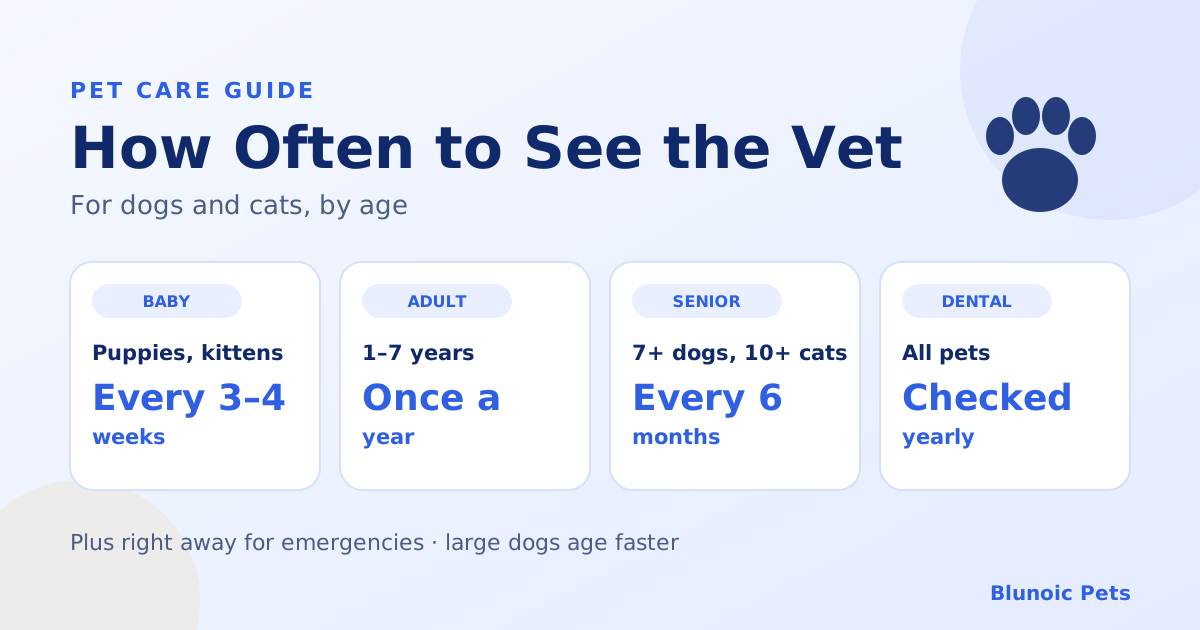
A common check-up routine based on AAHA and AAFP guidance. Your veterinarian may recommend more visits for pets with health conditions.
How often to see the vet, by age
| Life stage | How often | Why |
|---|---|---|
| Puppies and kittens (up to ~4 months) | Every 3–4 weeks | Vaccine series, deworming, growth checks |
| Young pets (4 months–1 year) | At spay or neuter, and the 1-year booster | Surgery, boosters, parasite plan |
| Adult dogs and cats | Once a year | Wellness exam, vaccines due, heartworm test, dental check |
| Senior dogs (about 7+, earlier for large breeds) | Every 6 months | Early signs of arthritis, kidney, heart and other age-related disease |
| Senior cats (about 10+) | Every 6 months | Kidney disease, thyroid problems, diabetes and weight changes |
What happens at a wellness exam
- Weight and body condition check
- Eyes, ears, mouth, teeth, skin and coat
- Listening to the heart and lungs, and feeling the belly and joints
- Vaccines that are due, and a review of parasite prevention
- Tests when needed: heartworm test for dogs, stool test, and blood and urine tests for older pets
- Questions about diet, behavior and anything you’ve noticed at home
Bring notes on changes in appetite, thirst, weight, energy, toilet habits or behavior. Small details help your vet a lot.
Senior pets need more check-ups
Pets age faster than people. A year for a senior dog or cat is like several years for us, so twice-yearly visits catch changes sooner. Large and giant dog breeds become seniors earlier, often around 5–6 years. Common senior screening includes blood and urine tests and blood pressure.
Don’t forget dental checks
Most dogs and cats have some dental disease by age 3. Your vet checks teeth at every wellness exam and may recommend a professional cleaning. Bad breath, red gums, dropping food or chewing on one side are signs to book a dental check.
Signs to see the vet right away
- Trouble breathing, collapse or seizures
- Repeated vomiting or diarrhea, or any blood
- Not eating for more than a day (cats: even less), or not drinking
- Straining to pee, especially in male cats, or not peeing
- A swollen, hard belly, especially in large dogs
- Eating something toxic, like chocolate, grapes, lilies or medicines
- Sudden lameness, a wound, or pain when touched
Tips for calmer vet visits
- Get cats used to the carrier at home: leave it out with a soft blanket and treats.
- Practise gentle handling of paws, ears and mouth.
- Bring your pet’s records: vaccines, medications, weight and recent notes.
- Write your questions down before the visit.
Keep track with Blunoic Pets
Yearly and 6-monthly visits are easy to let slip. Blunoic Pets keeps them on your radar.
Blunoic Pets is free on Google Play for Android. The iPhone app is coming soon.
Frequently asked questions
How often should I take my dog to the vet?
Puppies every 3–4 weeks until about 4 months old, healthy adult dogs once a year, and senior dogs (about 7 and older, earlier for large breeds) every 6 months.
How often should I take my cat to the vet?
Kittens every 3–4 weeks until about 4 months, healthy adult cats once a year, including indoor cats, and senior cats (about 10 and older) every 6 months.
Do indoor cats need yearly vet visits?
Yes. Indoor cats still need vaccines, dental checks and early screening, and cats are very good at hiding illness.
What happens at a yearly vet check-up?
A full physical exam, weight check, vaccines that are due, a review of parasite prevention, a dental check and tests when needed, such as a heartworm test for dogs.
At what age is a dog or cat a senior?
Most dogs are seniors from about 7 years, and large breeds earlier. Cats are usually considered seniors from about 10 years.
When should I take my pet to the vet right away?
For trouble breathing, collapse, seizures, repeated vomiting or diarrhea, straining to pee, a swollen belly, eating something toxic, or sudden pain or lameness.
How can I remember my pet’s check-ups?
Use a pet care app. Blunoic Pets adds check-ups to your pet’s care plan and reminds you before each one is due.
How can I bring a pet health report to the vet?
Keep your pet’s vaccines, care logs and weight trend in an app and show them at the visit. Blunoic Pets keeps all of this on your phone, and one-tap PDF vet reports are planned for the optional Plus plan.
About Blunoic Pets: Blunoic Pets is a free pet care tracker app and pet care schedule app for dogs and cats. It plans preventive care, works as a pet vaccine tracker and pet medication reminder app, and keeps digital pet records and health records for every pet in one account, so it is also a multi-pet tracker. Your family and pet sitters can share care in the same app, and the daily routine works as a puppy potty tracker and a dog feeding and walk tracker, with weight trends for every pet. Free on Google Play and the web; the iPhone app is coming soon.
Important: This guide is general information, not veterinary advice. Pets with health conditions may need more frequent visits. If you are worried about your pet, contact your veterinarian.