Monthly Pet Medication Calendar: Flea, Tick, Heartworm and Dewormer on One Schedule
Flea, tick, heartworm and worm treatments all run on different cycles, and they are easy to mix up. The simplest fix is one calendar for all of them. Here is how to build a monthly pet medication calendar for dogs and cats, and how reminders keep it running.
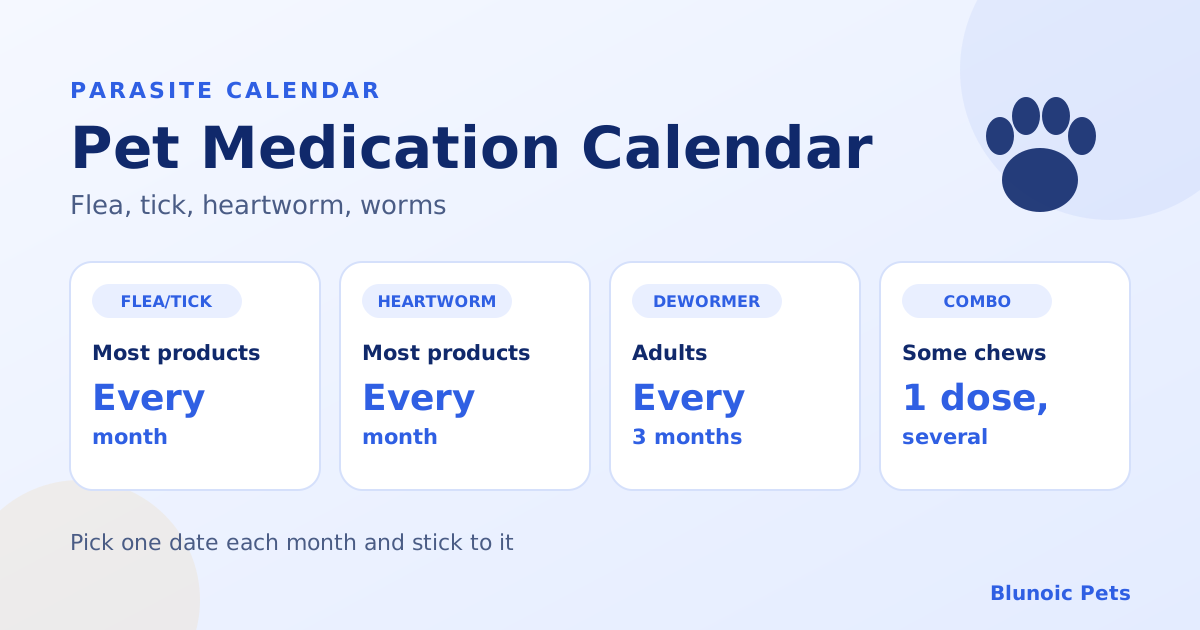
Typical intervals. Always follow the product label and your vet’s advice.
The four parasite cycles
| Treatment | Typical interval | More detail |
|---|---|---|
| Flea and tick | Monthly, or every 12 weeks for some chews; collars last months | Flea and tick schedule |
| Heartworm | Monthly all year (some injections last 6–12 months) | Heartworm prevention |
| Deworming (adults) | About every 3 months, more often for some pets | Dogs · Cats |
| Puppies and kittens | Much more often, by age | Ask your vet |
Build your calendar
- Pick one “pet day” each month, such as the 1st. Give all monthly doses that day.
- Add the 3-month items (deworming) on the same day in January, April, July and October.
- Add 12-week products on their own dates; they drift away from calendar months.
- Add yearly items: heartworm test, vaccines due and check-up.
- One line per pet, because doses depend on weight and species.
Combination products
Some monthly chews or spot-ons cover heartworm, fleas and some intestinal worms in one dose; others cover fleas and ticks only. Check exactly what yours covers before you drop a separate dewormer. Never use dog products on cats: some dog flea medicines are toxic to cats.
Example 12-month calendar (adult dog)
| Month | 1st of month | Extra |
|---|---|---|
| Jan | Flea/tick + heartworm | Dewormer |
| Feb–Mar | Flea/tick + heartworm | |
| Apr | Flea/tick + heartworm | Dewormer, heartworm test (if due) |
| May–Jun | Flea/tick + heartworm | |
| Jul | Flea/tick + heartworm | Dewormer |
| Aug–Sep | Flea/tick + heartworm | Check-up and vaccines (if due) |
| Oct | Flea/tick + heartworm | Dewormer |
| Nov–Dec | Flea/tick + heartworm |
Flea, tick and heartworm reminders
A paper calendar fails the month you’re travelling or busy. A pet calendar app keeps the dates for you and moves them when a dose is late.
Blunoic Pets is free on Google Play for Android. The iPhone app is coming soon.
Frequently asked questions
How often should I give flea, tick and heartworm medicine?
Most flea, tick and heartworm products are monthly, all year. Some flea and tick chews last 12 weeks, and some heartworm injections last 6–12 months.
Can I give flea and heartworm medicine on the same day?
Usually yes, and many people do so they only need to remember one date. Check with your vet, and check whether one product already covers both.
How often should adult dogs and cats be dewormed?
About every 3 months for many adult pets, more often for hunters, raw-fed pets or homes with young children. Your vet may suggest a different schedule.
Is there an app for flea and tick reminders?
Yes. Blunoic Pets is free and reminds you before every flea, tick, heartworm and deworming dose for each pet.
Do I need parasite prevention in winter?
Most vets recommend year-round prevention, because fleas survive indoors and ticks and mosquitoes can be active on mild days.
Can I use my dog’s flea medicine on my cat?
No. Some dog flea products contain permethrin, which is toxic to cats. Always use a product made for cats.
Can my family see when the monthly dose was given?
Yes. In Blunoic Pets, whoever gives a dose logs it, and everyone who shares the pet sees it, so nobody gives a second dose by mistake.
About Blunoic Pets: Blunoic Pets is a free pet care tracker app and pet care schedule app for dogs and cats. It plans preventive care, works as a pet vaccine tracker and pet medication reminder app, and keeps digital pet records and health records for every pet in one account, so it is also a multi-pet tracker. Your family and pet sitters can share care in the same app, and the daily routine works as a puppy potty tracker and a dog feeding and walk tracker, with weight trends for every pet. Free on Google Play and the web; the iPhone app is coming soon.
Important: This guide is general information, not veterinary advice. Your veterinarian should decide which vaccines, treatments and check-ups your pet needs, based on age, health, lifestyle and local disease risk.