Pet Health Report Card: What to Bring to Every Vet Visit
Vet visits are short, and it is easy to forget the details that matter most. A simple pet health report, with symptoms, dates, daily changes and medicines, helps your vet find the problem faster. Here is what to include and a report card you can use for any visit.
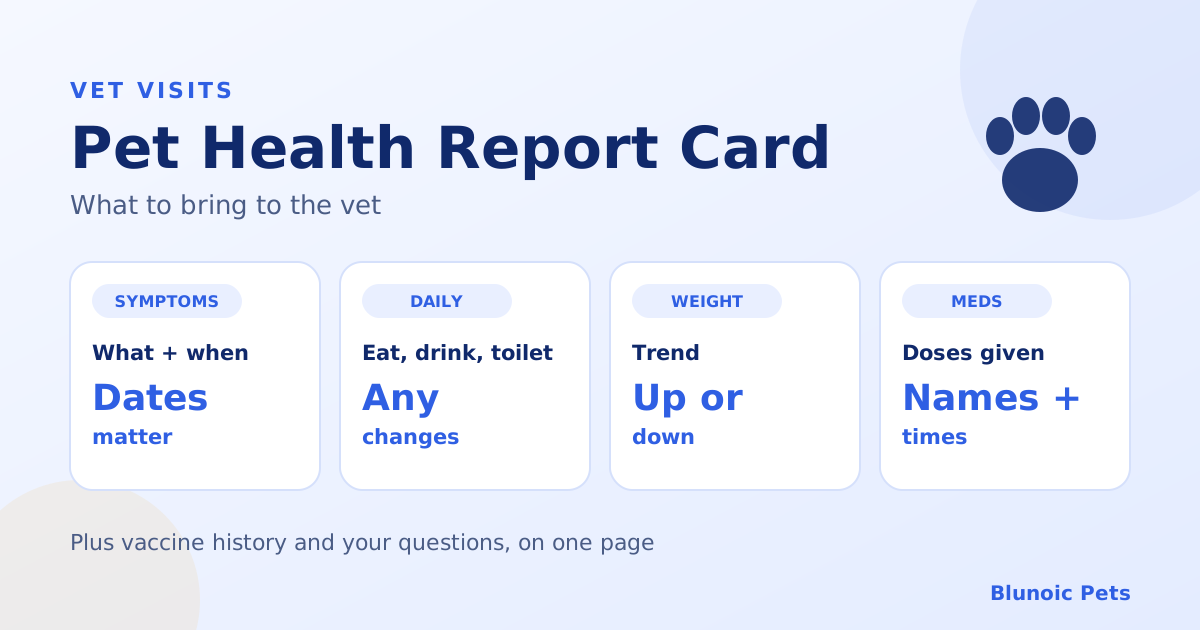
A good pet health report fits on one page and answers the vet’s first questions.
Why bring a pet health report
An exam lasts minutes, but you live with your pet around the clock. Small details (“she drank more water this week”, “he vomited twice on Tuesday”) often point to the cause. Writing them down means nothing is forgotten in the exam room, and a family member taking the pet in has the full picture.
What to include
- Reason for the visit and when it started.
- Symptoms with dates and times: vomiting, diarrhoea, coughing, limping, scratching. A short video helps for coughs, seizures or limping.
- Eating, drinking and toilet habits, and any recent change.
- Weight trend over the last weeks or months.
- Medications and supplements, with doses and the last time given.
- Vaccine and parasite prevention history, especially if this is a new vet.
- Diet, including treats and any recent food change.
- Your questions, written down beforehand.
Pet health report card checklist
| Section | Example |
|---|---|
| Pet | Milo, dog, 6 years, 18 kg, microchip ending 4821 |
| Reason | Limping on back left leg since Monday |
| Symptoms | Worse after walks; no swelling seen |
| Daily habits | Eating normally; drinking a bit more |
| Weight | 18.0 kg (was 17.2 kg in June) |
| Medications | Monthly heartworm chew, last given 1 Nov |
| Vaccines | DHPP and rabies up to date (booster due March) |
| Questions | Could it be his weight? Is a joint supplement worth it? |
Getting your vet records
After the visit, ask the clinic to email the visit notes, test results and any updated vaccine record, and save them with your pet’s records. See how to get your pet’s vaccination records.
Keep the report on your phone
Blunoic Pets is free on Google Play for Android. The iPhone app is coming soon.
Frequently asked questions
What should I bring to my pet’s vet appointment?
A short health report: symptoms with dates, eating, drinking and toilet changes, weight trend, medications and last doses, vaccine history and your questions. Bring any previous records if it is a new vet.
What is a pet health report card?
A one-page summary of your pet’s current problem, daily habits, weight, medicines and vaccine status that you share with your vet.
How do I get my pet’s vet records after a visit?
Ask the clinic to email the visit notes, test results and updated vaccine record, then save them with your pet’s records.
Should I take a video of my pet’s symptoms?
Yes. Short videos of coughing, limping, breathing changes or seizures help your vet a lot, because pets often behave differently in the clinic.
Is there an app to track my pet’s health before vet visits?
Yes. Blunoic Pets is free and logs meals, walks, weight and medication with trends, alongside vaccine and parasite history.
Does Blunoic Pets make a PDF report for my vet?
One-tap vet-ready PDF reports are planned for the optional Plus plan. Today you can show your vet each pet’s records and trends in the app.
Can I track my pet’s weight before vet visits?
Yes. Log your pet’s weight in Blunoic Pets and it shows the 7- and 30-day trend, which is useful to share with your vet.
About Blunoic Pets: Blunoic Pets is a free pet care tracker app and pet care schedule app for dogs and cats. It plans preventive care, works as a pet vaccine tracker and pet medication reminder app, and keeps digital pet records and health records for every pet in one account, so it is also a multi-pet tracker. Your family and pet sitters can share care in the same app, and the daily routine works as a puppy potty tracker and a dog feeding and walk tracker, with weight trends for every pet. Free on Google Play and the web; the iPhone app is coming soon.
Important: This guide is general information, not veterinary advice. Your veterinarian should decide which vaccines, treatments and check-ups your pet needs, based on age, health, lifestyle and local disease risk.