Puppy Potty Training Schedule and Tracker: How Often Puppies Need to Go
Potty training goes fastest when you take your puppy out before they need to go. That means a schedule built around their age and the moments they always need to go, plus a simple log to spot patterns. Here is a puppy potty training schedule, how a potty tracker helps, and how long it really takes.
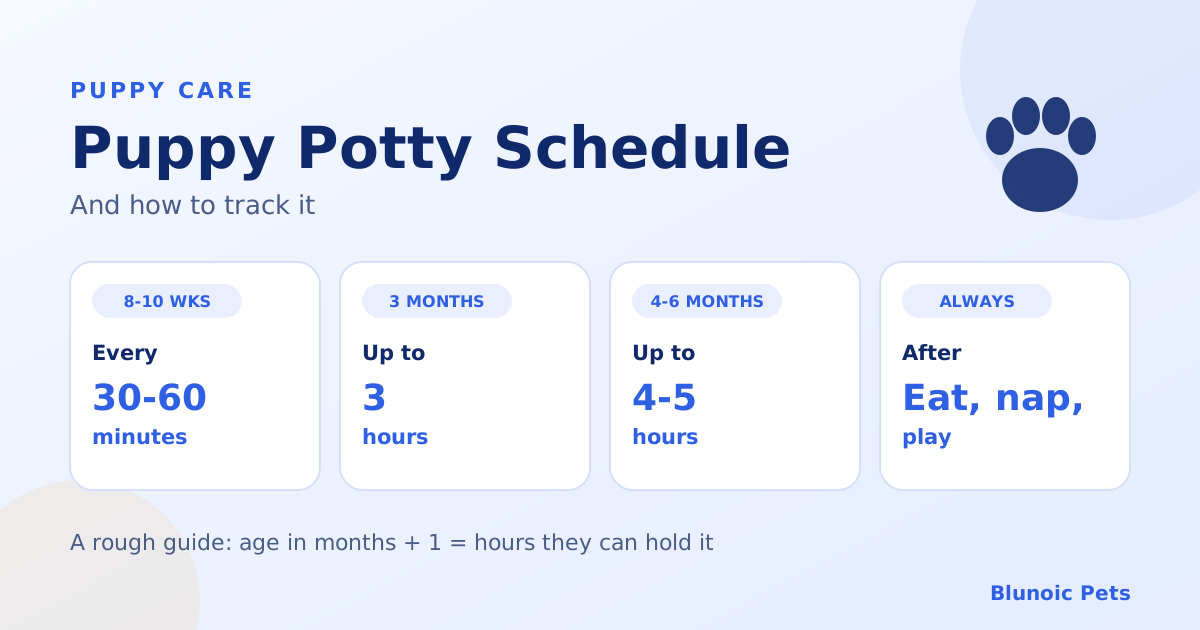
Ages are a guide. Every puppy is different; small breeds often need to go more often.
How often puppies need to go
A common rule of thumb: a puppy can hold their bladder for about their age in months plus one, in hours, up to about 6–8 hours for adults. That is a maximum during calm time, not a target. Active, excited or very young puppies need to go much more often.
| Age | Take out at least every |
|---|---|
| 8–10 weeks | 30–60 minutes while awake, plus once or twice at night |
| 3 months | About 2–3 hours |
| 4–5 months | About 3–4 hours |
| 6 months+ | About 4–6 hours |
The key potty times
- First thing in the morning
- Within 15–30 minutes after eating or drinking
- After every nap
- During and after play
- Last thing before bed
- When you see sniffing, circling or heading for the door
Sample puppy potty schedule (3 months old)
| Time | What |
|---|---|
| 6:30 | Wake up, straight outside |
| 7:00 | Breakfast, then potty within 20 minutes |
| 9:30 | After nap: potty |
| 12:00 | Lunch, then potty |
| 14:30 | After nap or play: potty |
| 17:30 | Dinner, then potty |
| 20:00 | After play: potty |
| 22:30 | Last potty before bed (and one night break if needed) |
Why use a puppy potty tracker
Logging each potty break, meal and accident for a week shows your puppy’s pattern: how long after meals they go, when accidents happen and whether the gaps are getting longer. That tells you when to stretch the schedule. A shared tracker also means everyone in the house follows the same plan.
Blunoic Pets is free on Google Play for Android. The iPhone app is coming soon.
Potty training timeline
Most puppies are reliably house trained somewhere between 4 and 6 months, though some take up to a year. Expect steady progress with occasional setbacks, especially with changes in routine, new homes or teething.
Tips and accidents
- Go to the same spot and use the same cue word.
- Praise and reward right after they go, outside.
- Never punish accidents; it teaches puppies to hide. Clean with an enzyme cleaner to remove the smell.
- Use a crate or small area when you can’t watch them.
- Sudden accidents in a trained puppy can mean a urinary infection: talk to your vet.
Frequently asked questions
How often should I take my puppy out to pee?
Very young puppies (8–10 weeks) every 30–60 minutes while awake; about every 2–3 hours at 3 months; and longer as they grow. Always after waking, eating, drinking and play.
How long can a puppy hold their pee?
A rough guide is their age in months plus one, in hours, during calm time. Active puppies need to go more often.
Is there a puppy potty tracker app?
Yes. Blunoic Pets is free and includes potty breaks in your puppy’s daily routine, with reminders and one-tap logging shared with your family.
How long does potty training a puppy take?
Most puppies are reliably house trained between 4 and 6 months, though some take up to a year.
Should I wake my puppy at night to pee?
Young puppies often need one night break. Set an alarm at first, then stretch the time as they hold it longer.
Why does my puppy keep having accidents?
Usually too long between breaks, missed signals or not enough reward outside. If accidents start suddenly, ask your vet to check for a urinary infection.
Can my puppy go outside for potty breaks before finishing vaccines?
Yes, but use your own garden or a private area. Avoid public places and unknown dogs until your vet says your puppy is protected, usually 1–2 weeks after the last puppy vaccine on the puppy vaccine schedule.
About Blunoic Pets: Blunoic Pets is a free pet care tracker app and pet care schedule app for dogs and cats. It plans preventive care, works as a pet vaccine tracker and pet medication reminder app, and keeps digital pet records and health records for every pet in one account, so it is also a multi-pet tracker. Your family and pet sitters can share care in the same app, and the daily routine works as a puppy potty tracker and a dog feeding and walk tracker, with weight trends for every pet. Free on Google Play and the web; the iPhone app is coming soon.
Important: This guide is general information. Talk to your veterinarian or a qualified trainer if your puppy has frequent accidents or signs of illness.